
Airport ground transportation has emerged as one of the most contested arenas in the mobility landscape, and airport advertising is now central to that battle. As travelers step off the plane, they face a choice between rideshare, car rental, shuttles, and local transit. This “first mile” decision is exactly where brands are investing in large‑format, digital, and directional media to turn awareness into action. With Uber and Lyft leading national brand recognition, Turo pushing a new ownership‑lite model, Enterprise modernizing a legacy category, and local providers like Mears and the Central Florida Expressway seeking relevance in a rideshare‑first world, airport media—especially JCDecaux’s premium inventory—has become the place where mobility strategy is made visible.
Statista’s brand awareness data underlines why this real estate is so valuable: Uber is the most well‑known mobility service provider in the United States, recognized by about 89 percent of respondents, with Lyft close behind at roughly 85 percent. Additional analysis of mobility brand recognition shows Enterprise with around 64 percent awareness, Turo at 36 percent, and a long tail of other emerging services taking up space in American consumers’ minds. In other words, by the time a traveler reaches baggage claim, they already know the major brands. Airport advertising’s job is not to introduce these names, but to convert pre‑existing awareness into usage at the exact moment of decision.
Maintaining Market Leadership with Airport Advertising
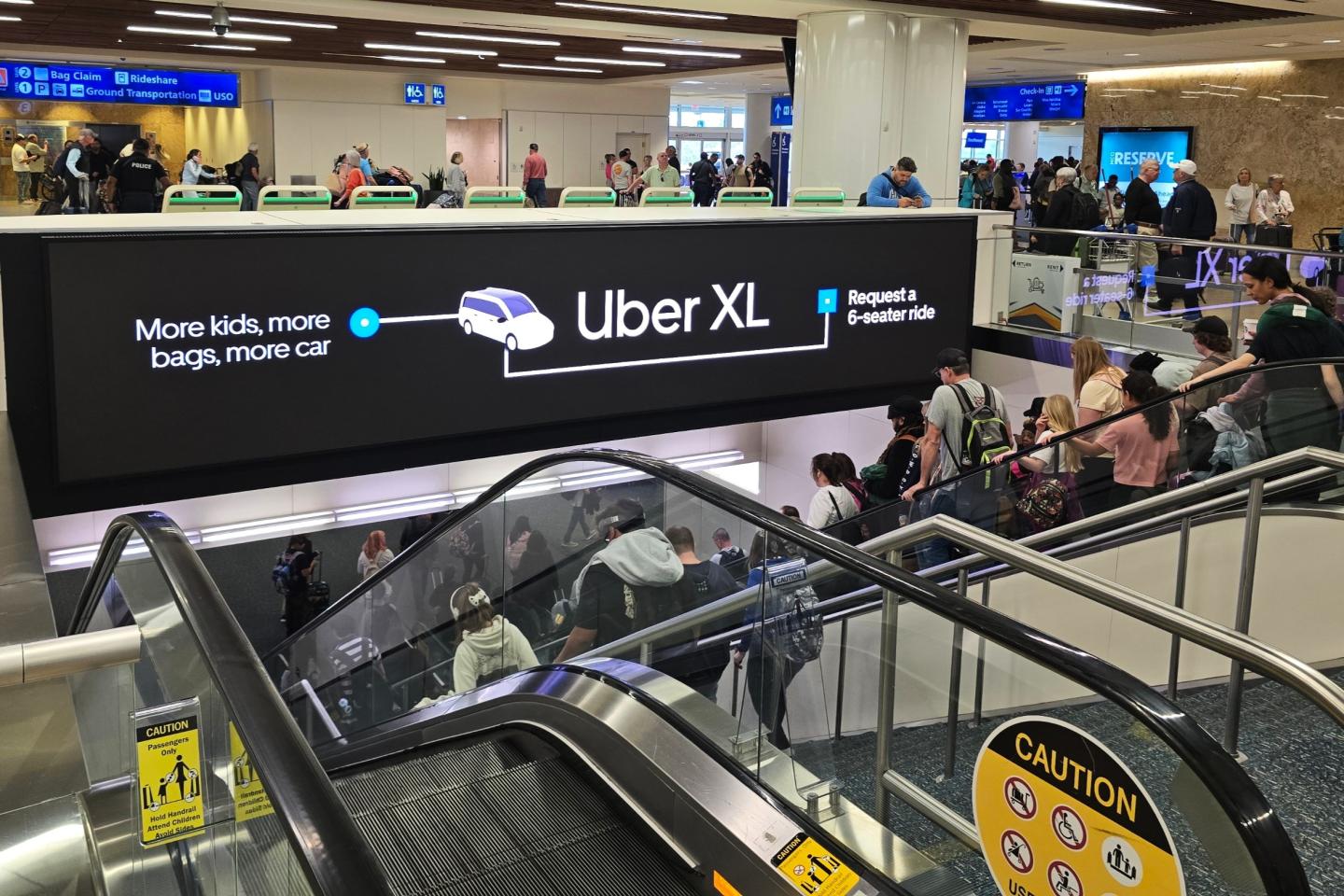
For Uber, Lyft, and Turo, JCDecaux airports function as a high‑impact, real‑world extension of their apps. Uber has partnered with JCDecaux in U.S. airports to deploy highly effective campaigns promoting the versatility of their services. From Uber Share- catering to price sensitive travelers- and Uber XL for large groups to Uber Black- for the premium business traveler, Uber’s multi-airport campaigns cater to travelers of all types to maximize their market share.
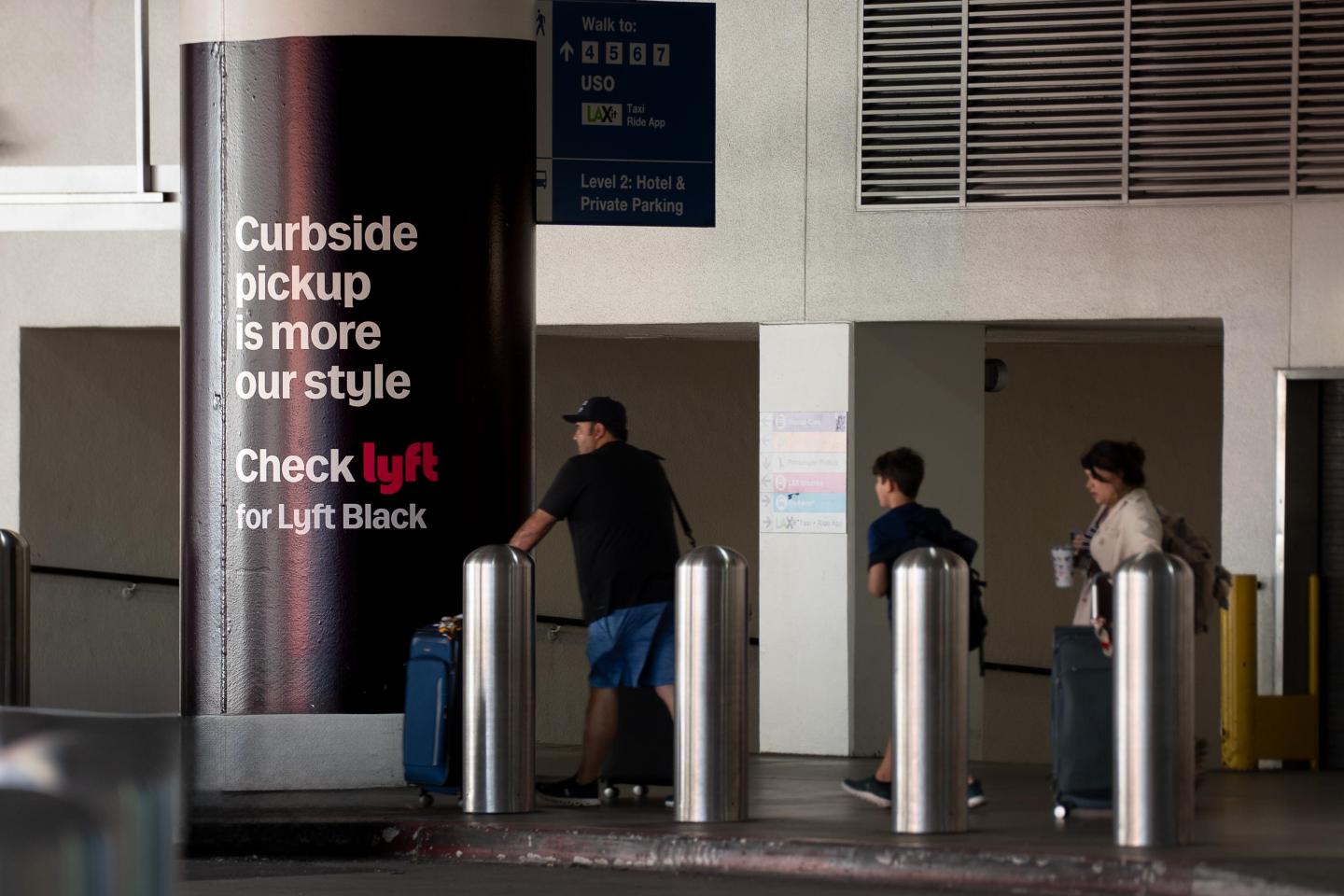
Lyft is extending this strategy outside the terminal by complementing their in-airport digital with exterior formats near Los Angeles International Airport’s rideshare zones. Column wraps near the designated rideshare pickup area allow Lyft to own the last visual touchpoint before a passenger gets into a car. This is a critical moment: travelers have their phones in hand, they’re opening an app, and they’re surrounded by a single brand’s color, logo, and messaging. Exterior column wraps that reference the airport’s ‘LAX-it rideshare zone’ build a deeper association with official airport infrastructure; reinforcing trust and making Lyft feel like the default mode of onward travel. In a context where both Uber and Lyft start from extremely high brand awareness levels, these physical cues help determine which app a traveler actually taps in those decisive few seconds.
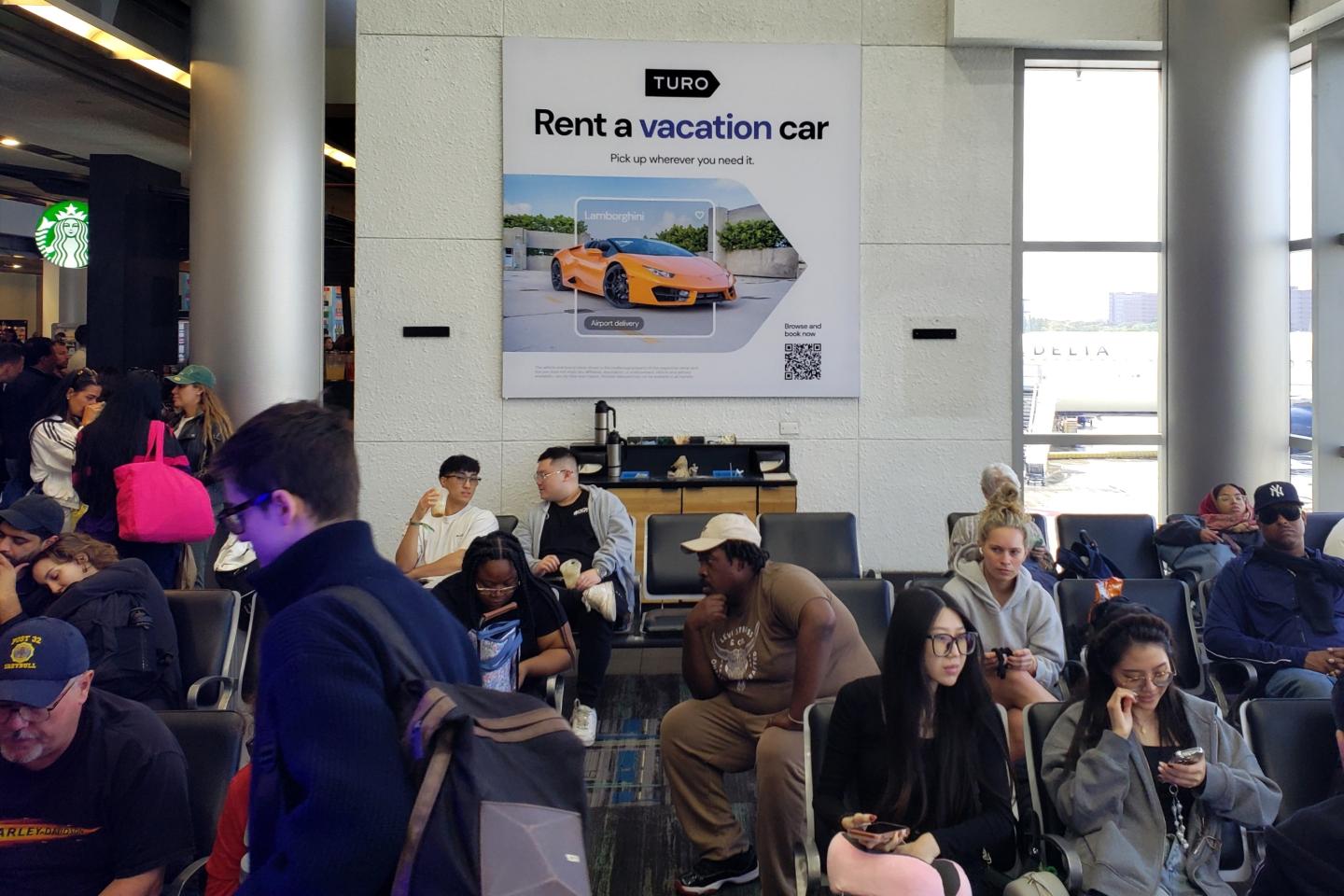
Turo, while operating a different model, is playing an equally nuanced airport game. With about a third of U.S. respondents already familiar with the brand, airport advertising allows Turo to reframe how travelers think about “car rental” at the point of need. Rather than competing directly in the rental car center rows, Turo can position itself as a flexible, digital‑native alternative accessible from the same smartphone that powers rideshare. JCDecaux digital and static formats in arrival corridors and baggage halls can highlight benefits like unique vehicle choices, local host experiences, and potentially better value for multi‑day stays. For Uber, Lyft, and Turo alike, the strategy is consistent: use airports to turn massive national awareness into on‑the‑spot behavior—downloads, app opens, and ride or booking confirmations.
Enterprise in the Airport: Keeping an Established Brand Name Current
With nearly 60 years of business under its belt, Enterprise is one of the most established names in U.S. mobility. Its challenge is not name recognition, but relevance in an era where many travelers instinctively reach for rideshare apps the moment they land. Airport digital screens are Enterprise’s answer to that challenge.
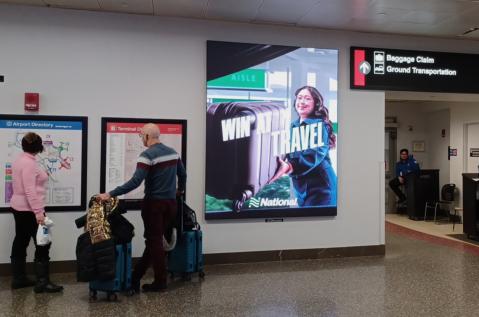
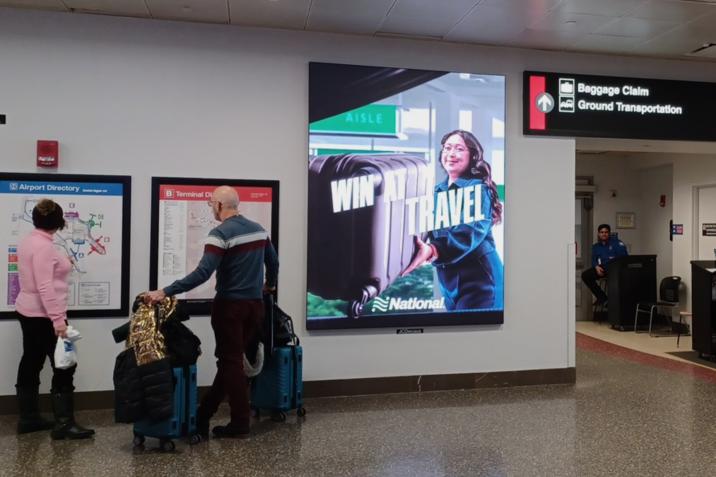
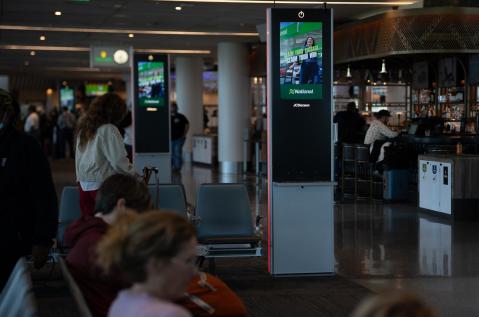
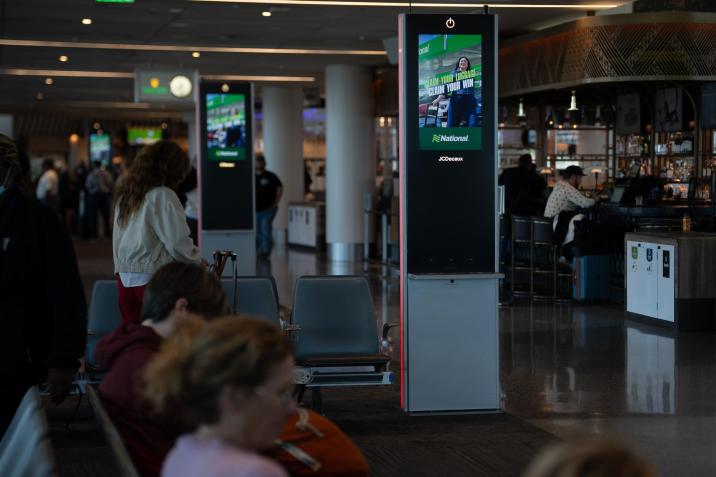
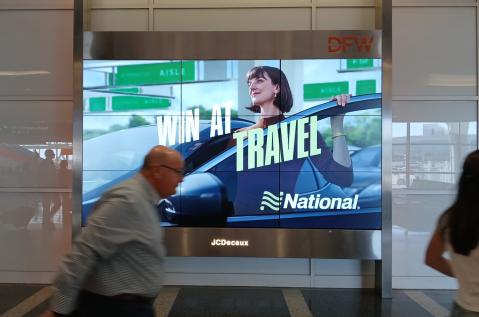
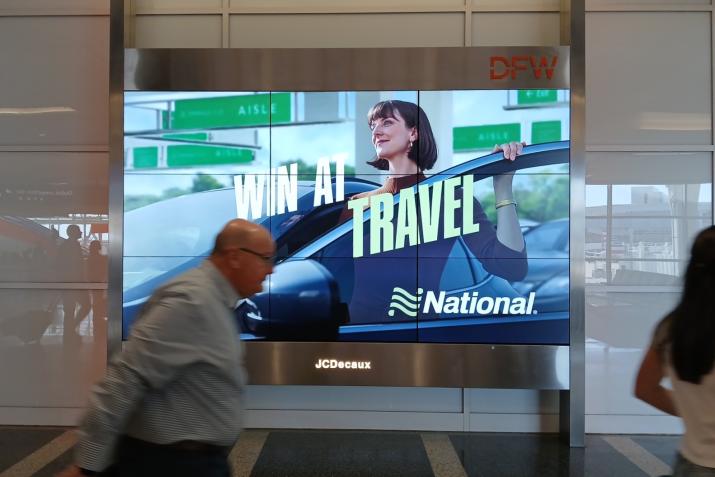
By running contemporary creative on JCDecaux digital networks in multiple markets, Enterprise uses the airport environment to update how travelers perceive the brand. With messaging emphasizing ease, convenience, and personalization to rival any modern app-based transit, Enterprise’s National Car Rental campaign reframes Enterprise not as a legacy counter in a long row of rental brands, but as a modern, tech‑enabled mobility partner. The airport setting is ideal for that repositioning: surrounded by rideshare and mobility messages, Enterprise can visually and tonally match the digital‑first language of its competitors while emphasizing advantages that are unique to having your own car. In doing so, Enterprise keeps its brand current and competitive at the exact point where travelers weigh the perceived convenience of an app tap against the real advantages of full vehicle access.
Orlando’s Local Transit Players: Capturing Audience Share in a Crowded Field
Orlando International Airport (MCO) offers a vivid illustration of how local players are fighting for attention alongside national mobility giants. The airport clearly supports rideshare, with Uber and Lyft permitted to operate at specified pickup locations and with official online guidance explaining where travelers can meet their drivers. Yet Orlando’s ground‑transport ecosystem extends far beyond rideshare and national rentals. Mears, a long‑standing Central Florida transportation operator, and the Central Florida Expressway Authority (CFX), which runs key toll roads connecting the airport to the region’s tourism and residential areas, both see MCO’s passengers as critical audiences.
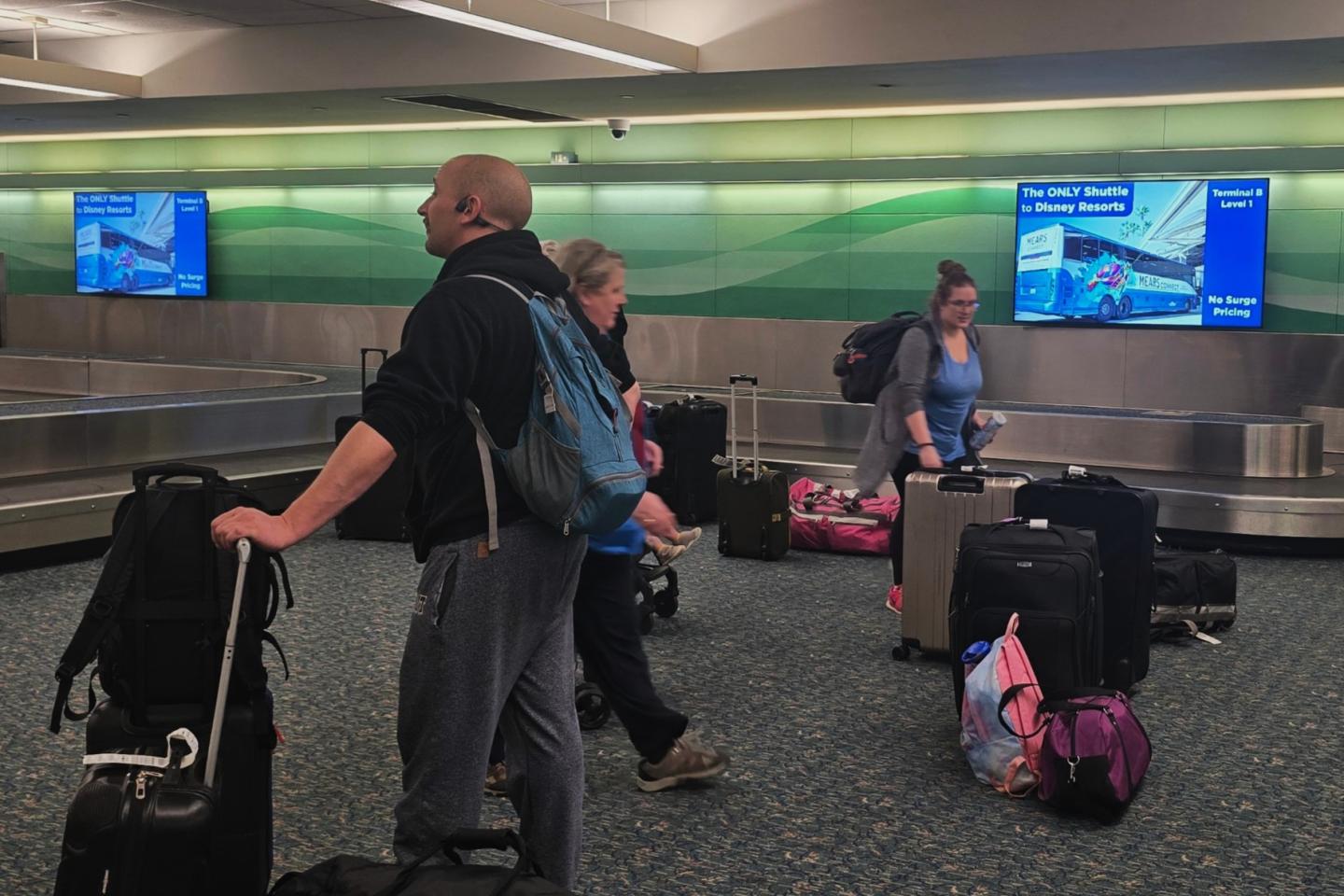
For Mears, airport advertising is about defending and evolving a legacy role in an increasingly app‑driven environment. Shuttle services, motor coaches, taxis, and charter operations are still highly relevant to families, large groups, and international visitors heading to theme parks and resorts. Strategic messaging in and around the terminal can position Mears as the simple, stress‑free choice: pre‑booked shuttles to specific resorts, clear pricing, and professional drivers who know the region. In a world where most travelers already know Uber and Lyft by name, Mears uses airport media to remind them that there is a local specialist designed specifically for Orlando’s unique leisure flows.
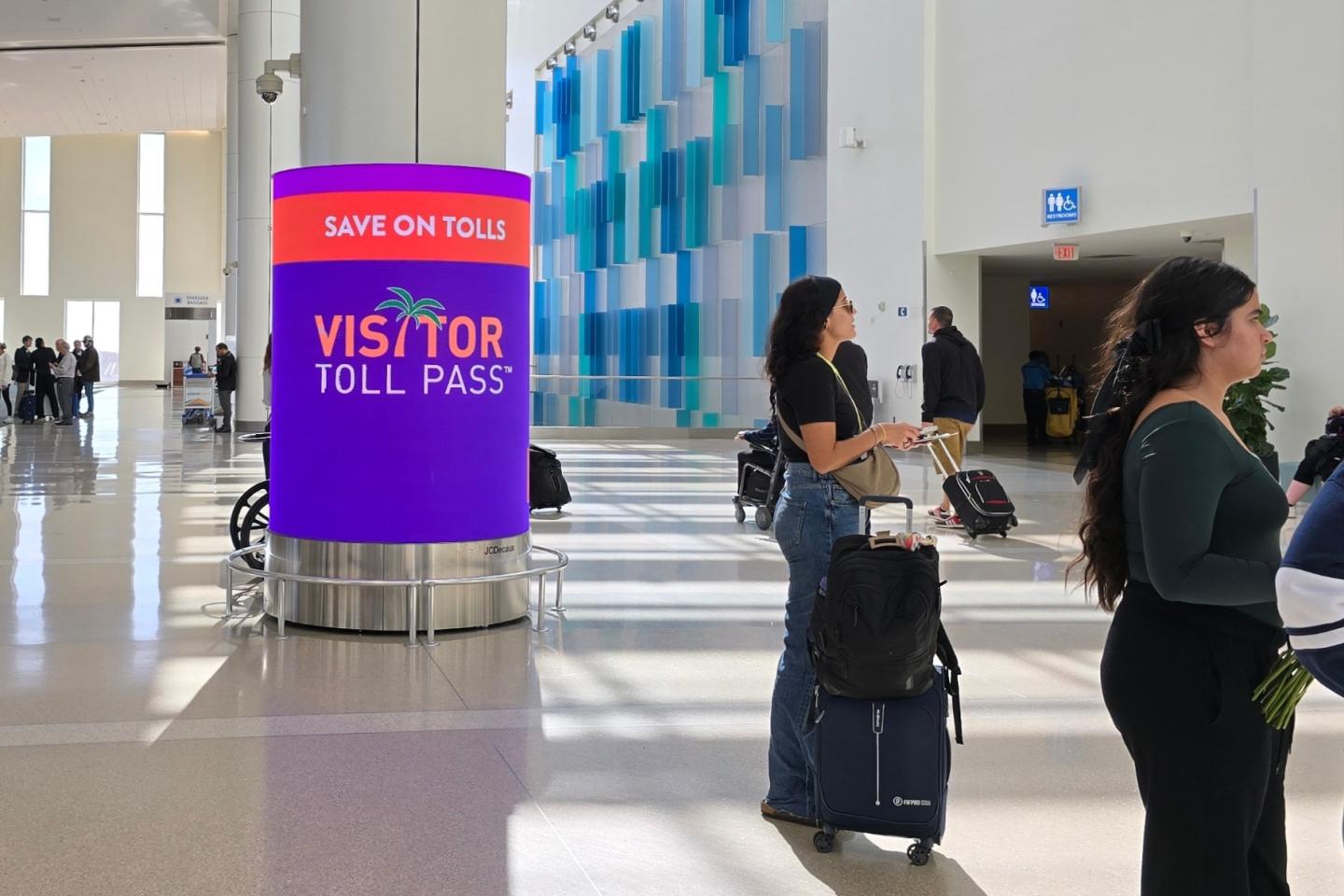
The Central Florida Expressway Authority has a different but equally important stake in the airport audience. Its expressways and toll roads form the backbone of access from MCO to major attractions, suburbs, and neighboring cities. While CFX is not selling rides so much as selling routes, airport advertising allows the authority to educate arriving travelers- especially those in rental cars- about which expressways will get them to their destinations faster and with more predictable travel times. When Enterprise, Turo users, and even rideshare drivers choose these toll facilities, the network sees benefits in congestion management and reliability, and travelers see real dollars stay in their pockets.
Though competing for a share of the same audience, the airport environment offers exclusive benefits to mobility brands across the board. Rideshare brands connect with travelers looking for short-term transportation on demand, car rental services cement their positioning as fundamental partners for longer term travel needs, and local brands leverage local knowledge and dedicated services so travelers can make the most of their time in-market. JCDecaux’s airport assets, spanning interior and exterior, static and digital, sit at the center of this contest, transforming brand awareness—already massive for many of these players—into decisive action at the curb.