
Los Angeles is increasingly becoming a magnet for early tech adopters, specifically the 18–34 age group that now makes up a significant portion of the city's 250,000-strong tech workforce. Unlike the traditional "pure-tech" focus of Northern California, LA's newcomers are "hybrid" innovators, merging AI with technological advancements and media. These are high-income travelers with an average tech salary of $115,000, individuals who view seamless connectivity not as a luxury, but as a utility.
AT&T Captures the Moment of Arrival
For telecom giants, the moment a traveler touches down is a critical window of opportunity. Leveraging the mass influx of international arrivals at Los Angeles International Airport (LAX), AT&T has masterfully utilized contextual messaging to greet passengers the second they enter the terminal. By positioning itself as "America’s largest wireless network," AT&T provides a frictionless solution for arrivals in immediate need of reliable connectivity.
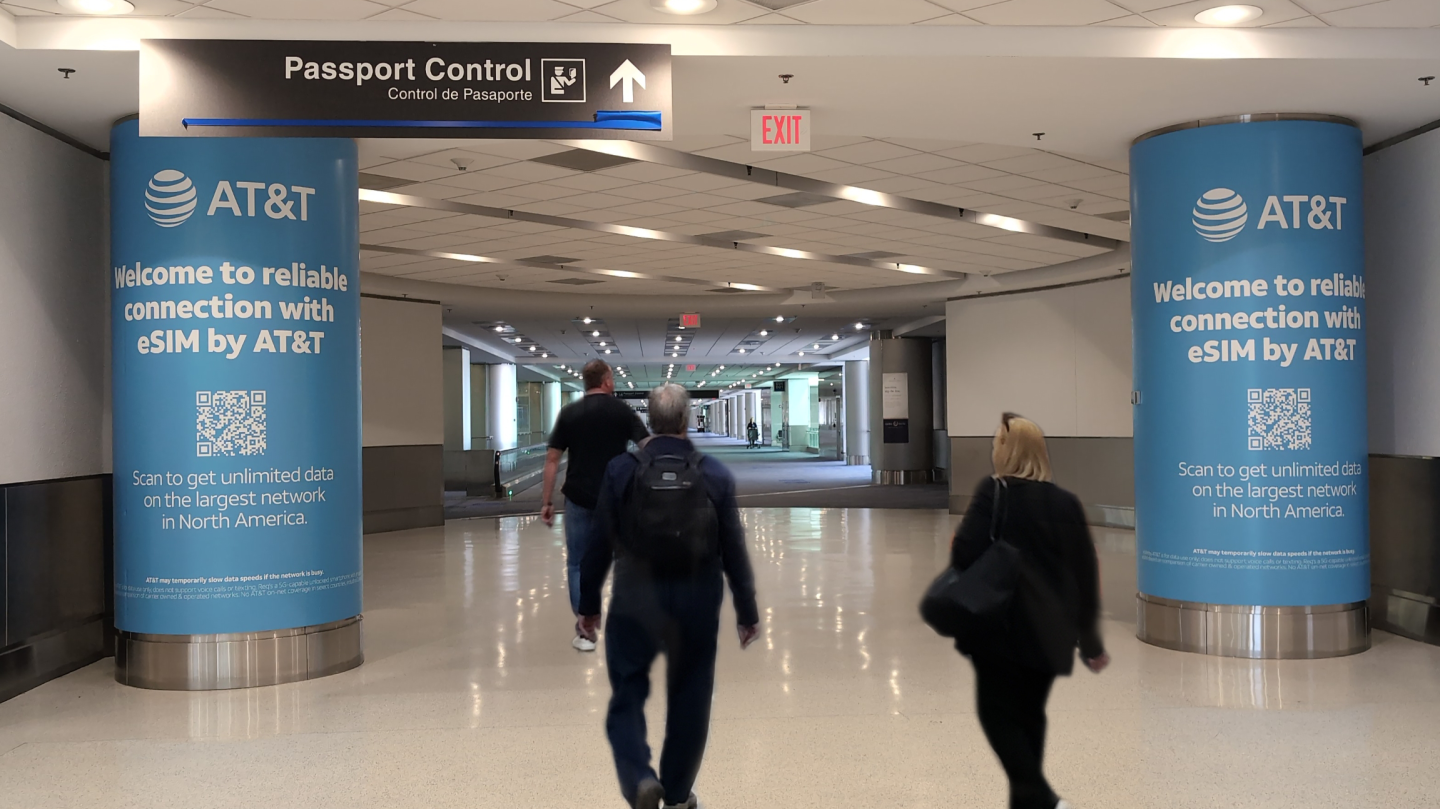
With static advertising extending the campaign's reach in Miami International Airport (MIA) and George Bush Intercontinental Airport (IAH), this messaging is guaranteed to make an impact with international travelers across the country. With Miami and Houston evolving into premier technology hubs, AT&T is strategically aligning its presence to support the sectors top innovators and leaders.
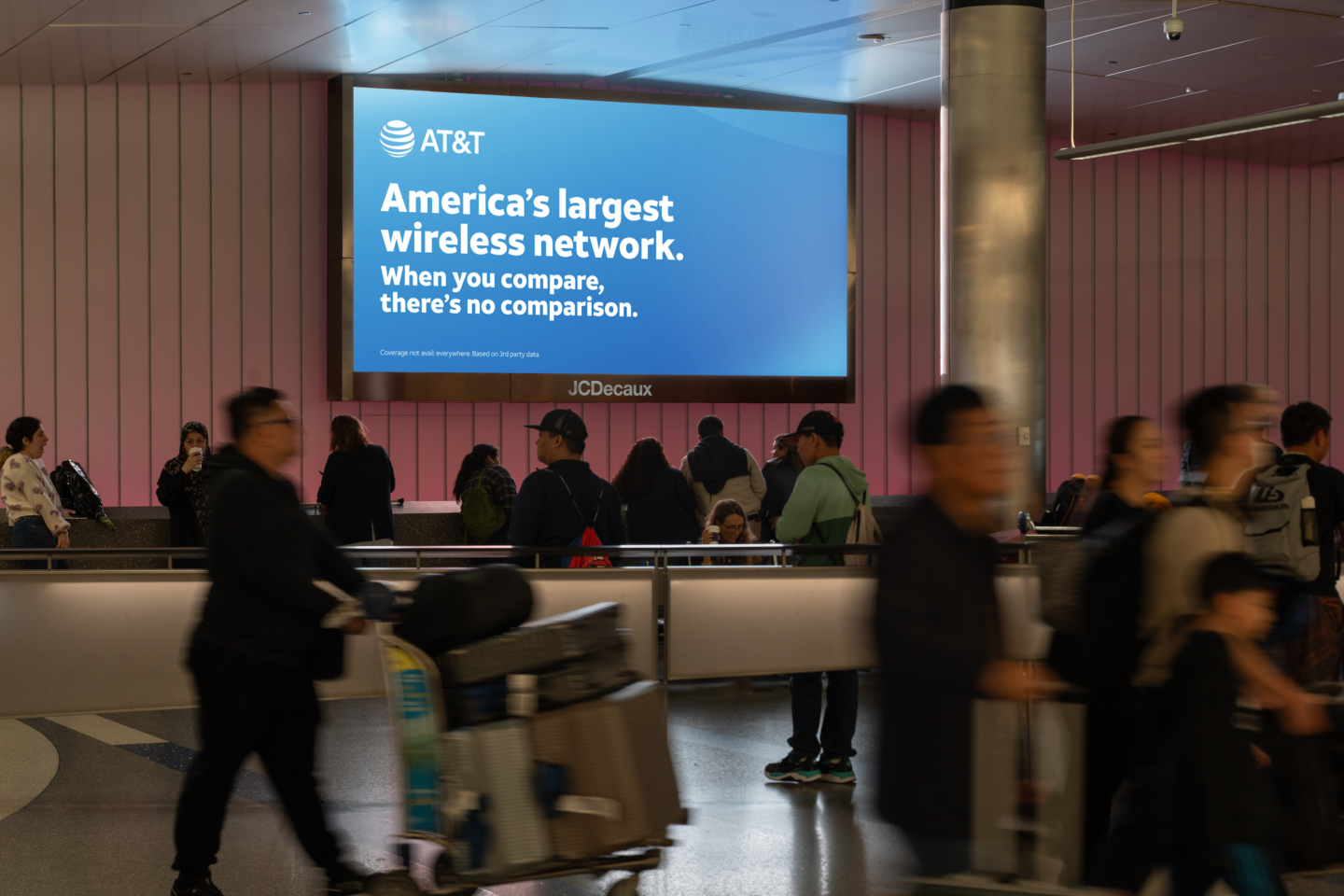
Out-of-Home (OOH) airport advertising is uniquely effective for the telecom sector because it meets consumers in a high-stakes, high-intent environment. According to JCDecaux research, airport advertising offers a perceived value and prestige that other channels struggle to replicate. For a telecom brand, being the first face a traveler sees in the arrivals hall translates into a powerful "top-of-mind" advantage. In fact, the OAAA confirmed that that an astounding 74% of mobile device users reported taking action on their mobile devices following recent exposure to DOOH ads, with actions ranging from online searches about advertisers (44%) to direct visits to advertiser websites (38%).
From Physical to Virtual: The eSIM Revolution
The industry is currently witnessing a massive shift from physical SIM cards to eSIM technology. This transition has forced telecom companies to pivot their business models to reflect a world that demands instant, digital-first connectivity. Key players like Airalo, the world’s first and largest eSIM provider, have seen explosive growth, now serving over 20 million users across 200+ countries (CVC).
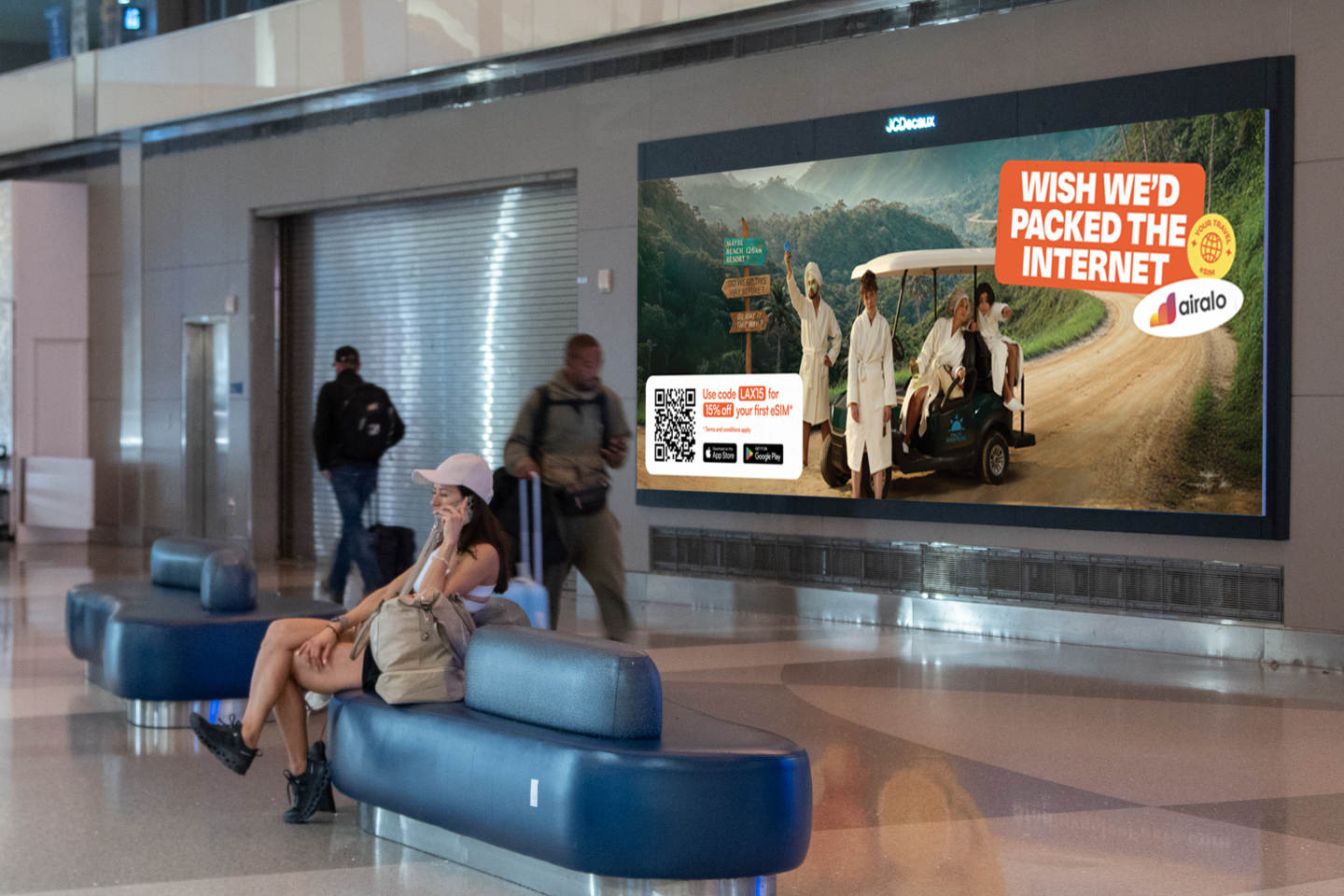
The December 2025 holiday season at LAX was one of the busiest on record, with the airport handling approximately 6.3 million passengers during that month alone (TSA). Recognizing the strategic value of this period, Airalo integrated itself into the heart of the passenger journey. The placement in the airport space is deliberate. As travelers navigate the complexities of baggage claim and international customs, the psychological "need for connection" peaks. By offering a quick, easy solution offering a first-time user discount code, Airalo converts high-stress transit moments into seamless digital activations.
The Future of the Connected Traveler
As LAX continues its multibillion-dollar modernization ahead of the 2028 Olympics, the airport serves as both a transit point and front line of the revolutionized digital experience. For telecom brands, the synergy between a rising tech-savvy audience and high-impact airport OOH media remains the gold standard for influence. In a city where innovation and culture collide, those who capture the traveler’s attention at the gate are the ones who will define the connectivity of tomorrow.