
As the largest sporting event in human history—engaging over six billion people across 16 host cities in the United States, Mexico, and Canada—this tournament represents an iconic cultural moment and a massive, highly synchronized wave of physical consumer migration. Globally, brands have committed a staggering $10.5 billion in advertising for the tournament cycle, surpassing average NFL regular-season spending. Even FIFA itself poured over $5 million into early Out-of-Home (OOH) media buys, validating a broader strategic shift toward using high-impact public spaces to build an unavoidable physical presence.
Global Giants Weaponize Physical Scale for Multi-Billion-Dollar Returns
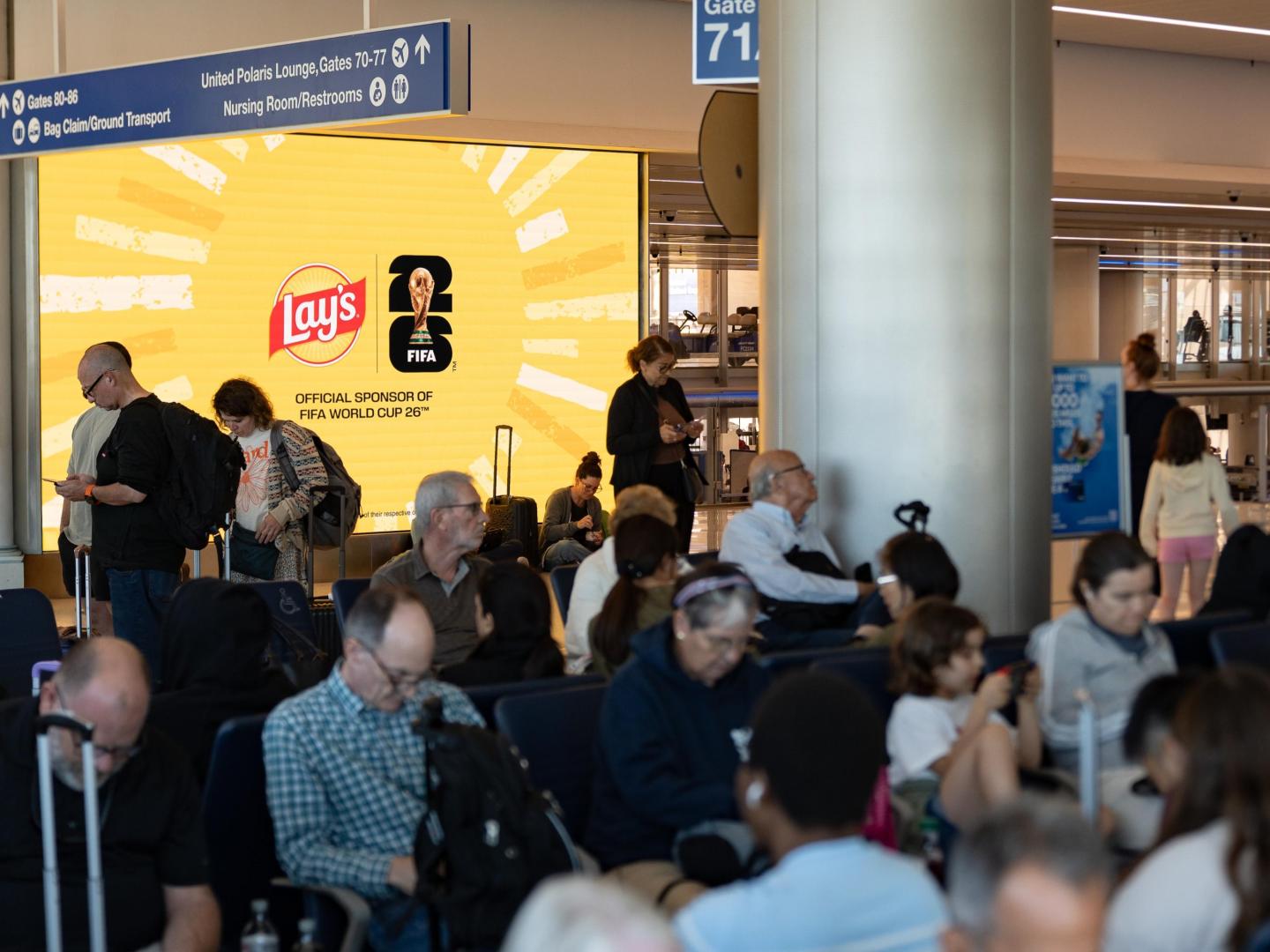
The tournament’s highest-tier partners are deploying Out-of-Home (OOH) media to amplify massive global investments. Global snack producer Frito-Lay has secured a coveted "Global Sponsor" designation, the second highest-level partnership tier in the FIFA hierarchy. With FIFA projecting a historic $8.9 billion in total revenue for this tournament cycle and sponsorship revenue jumping 37% from 2022 to an estimated $2.4 billion, competition for consumer attention is at an all-time high. To cut through the noise, elite sponsors rely on physical OOH assets to bridge the gap between stadium crowds and everyday consumers. For a legacy brand like Frito-Lay, integrating high-impact airport media ensures their multi-million-dollar global sponsorship translates directly into unavoidable physical dominance, capturing receptive consumer eyeballs and converting cultural hype into driven retail consumption. This mindset translates directly into performance, as data shows that 70% of passengers actively enjoy looking at terminal ads and 77% of air travelers take immediate action either during their dwell time or immediately after their trip.
Retail Innovators Capture Traveling Fans and Private Aviation Elite
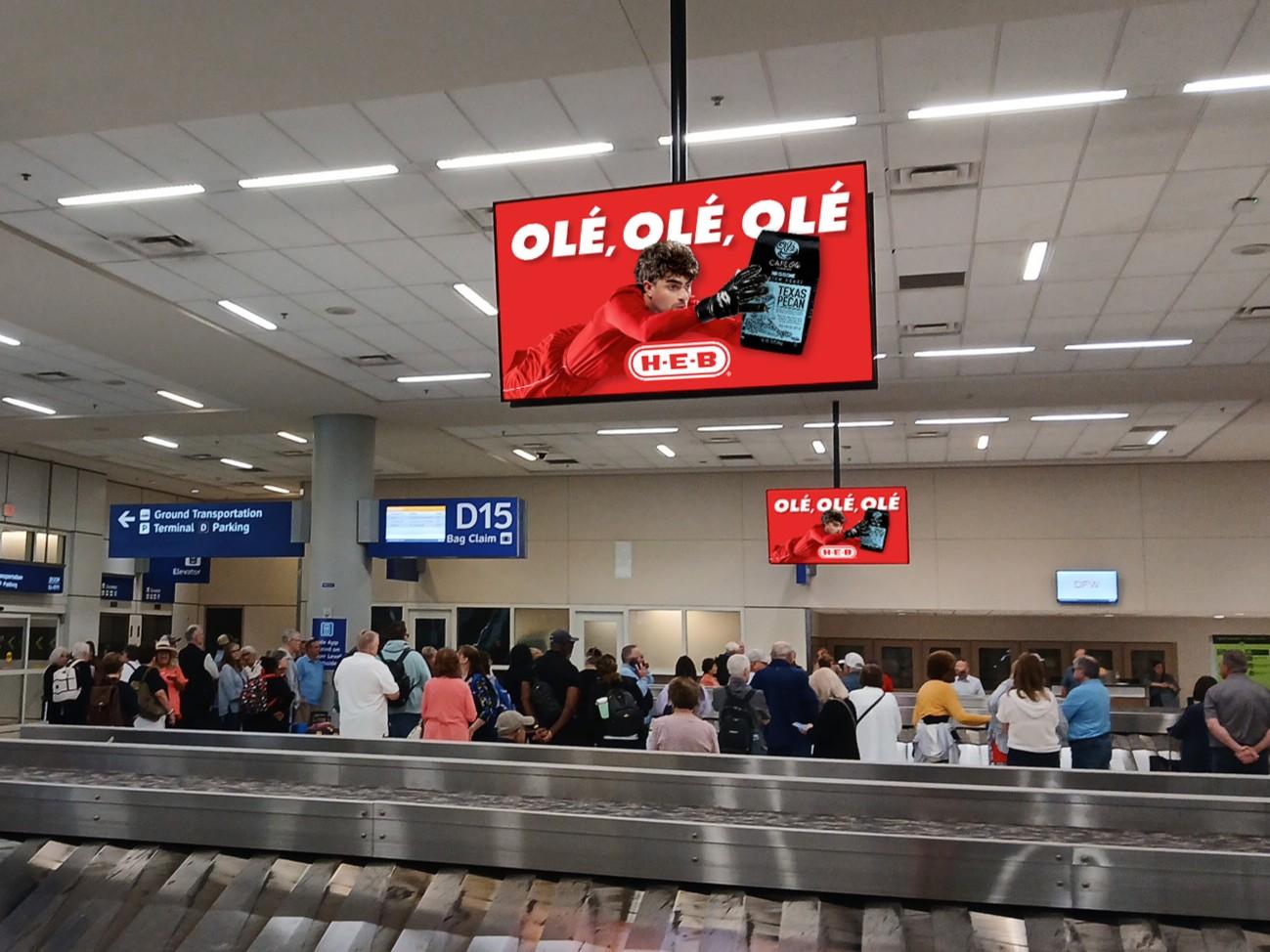
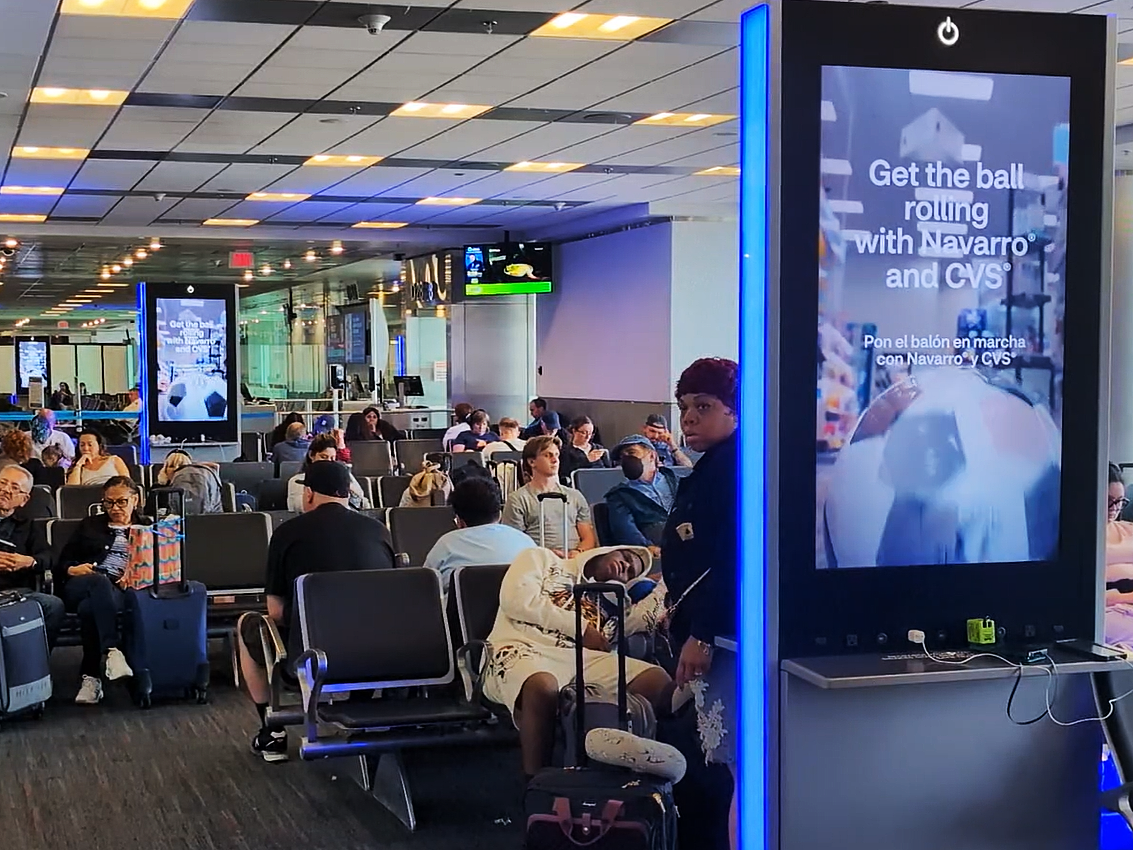
To scale their omnichannel footprints during this regional surge, prominent retail and consumer tech brands have executed two-month-long activations within primary travel corridors to capture fans flying directly toward host stadiums. The U.S. Travel Association projects international visitors to the 2026 World Cup will spend over $5,000 per person, roughly 1.7 times more than the typical visitor. Tapping into this high-spend demographic, Texas grocery powerhouse H-E-B strategically deployed high-impact digital creative across Dallas-Fort Worth International, Houston George Bush Intercontinental, and Houston William P. Hobby Airport, effortlessly capturing market share from incoming travelers heading to Houston’s NRG Stadium. In a parallel push, CVS Pharmacy activated its own creative across an interconnected network of the country's busiest travel hubs, including Los Angeles International, Houston, Dallas, and Miami, successfully bridging the gap between national transit and local brick and mortar.
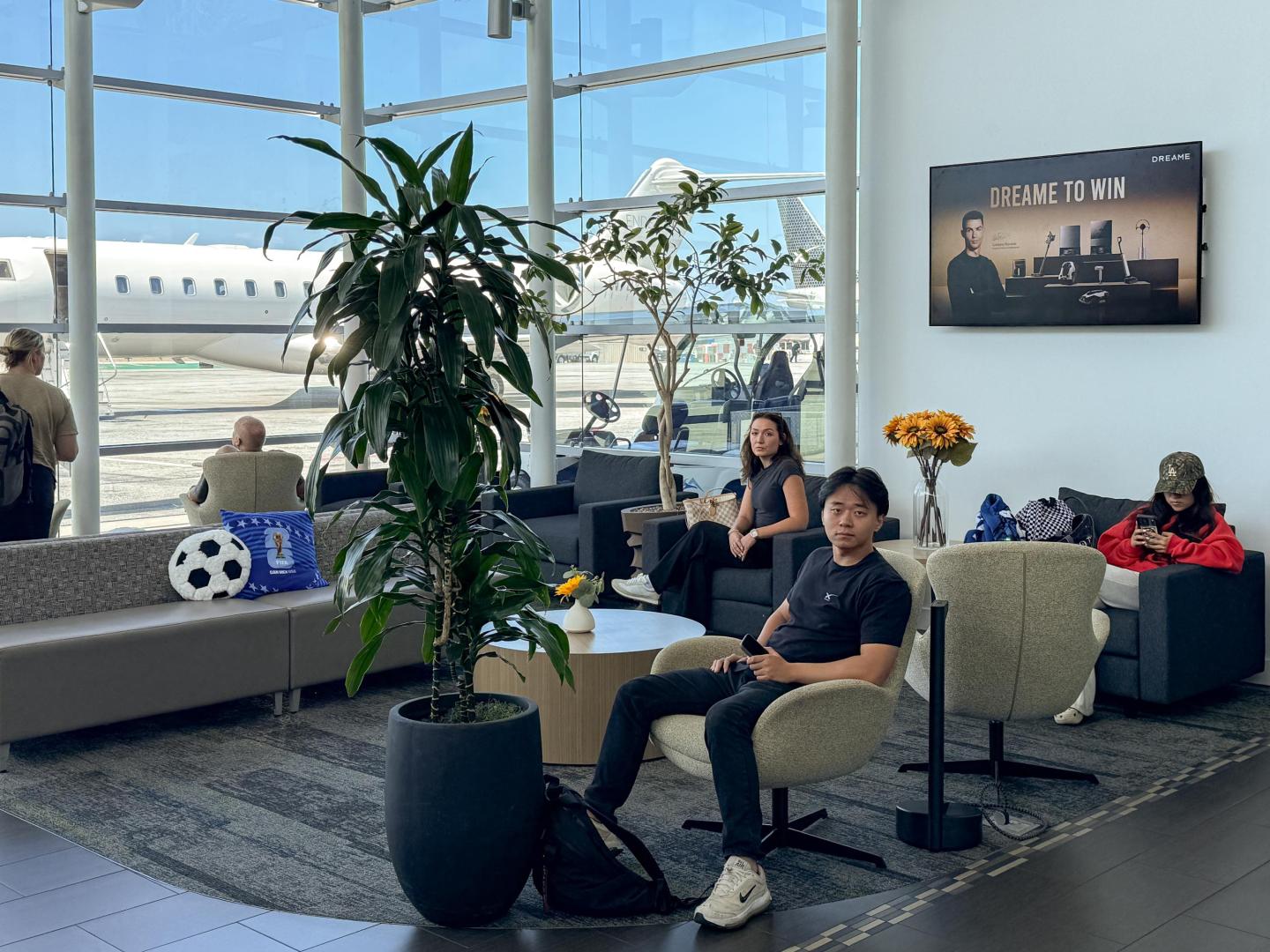
Beyond traditional commercial terminals, the massive scale of the World Cup has also opened unique doors to engage an ultra-premium, notoriously elusive demographic of corporate executives and high-net-worth individuals arriving via private charters. Smart home and tech innovator Dreame Technology successfully ran advanced creative assets simultaneously within main passenger terminals and JCDecaux’s highly exclusive private aviation network at LAX. Securing real estate within private aviation terminals is notoriously difficult due to highly guarded access, but by breaking into this high-barrier environment, Dreame Technology bypassed traditional media noise to speak directly to affluent VIPs.
Contextual Relevance: Service-Based DTC Brands Meet Consumers on the Move
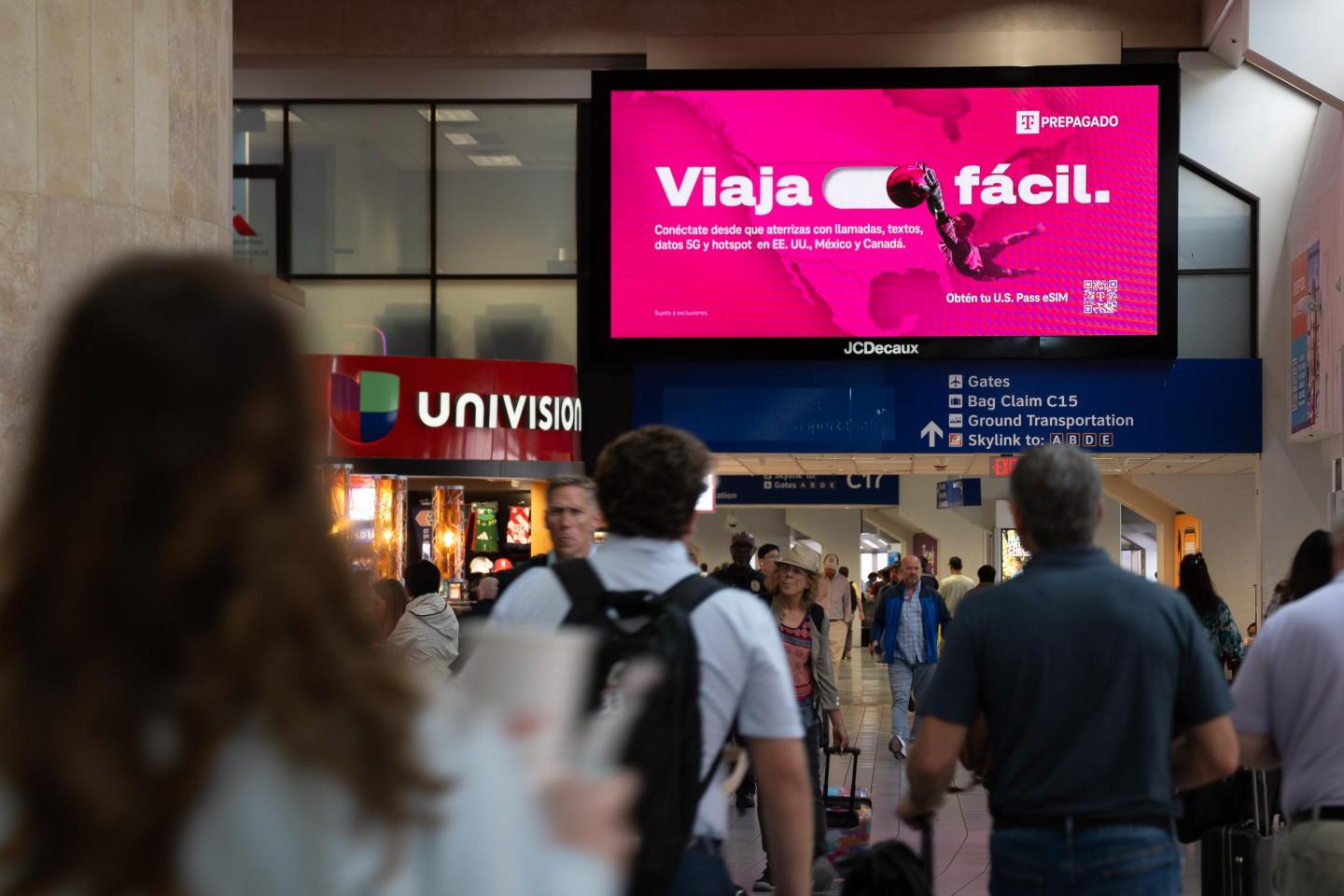
While product-based DTC brands capitalize on immediate purchase desires, service-oriented tech companies are leveraging airport out-of-home media to extend contextually relevant utility to traveling fans in real time. Telecom giant T-Mobile brought this strategy to life by dominating key media assets at two primary international gateways, Dallas-Fort Worth and Los Angeles International, ensuring incoming fans immediately associated their network with seamless tournament connectivity.
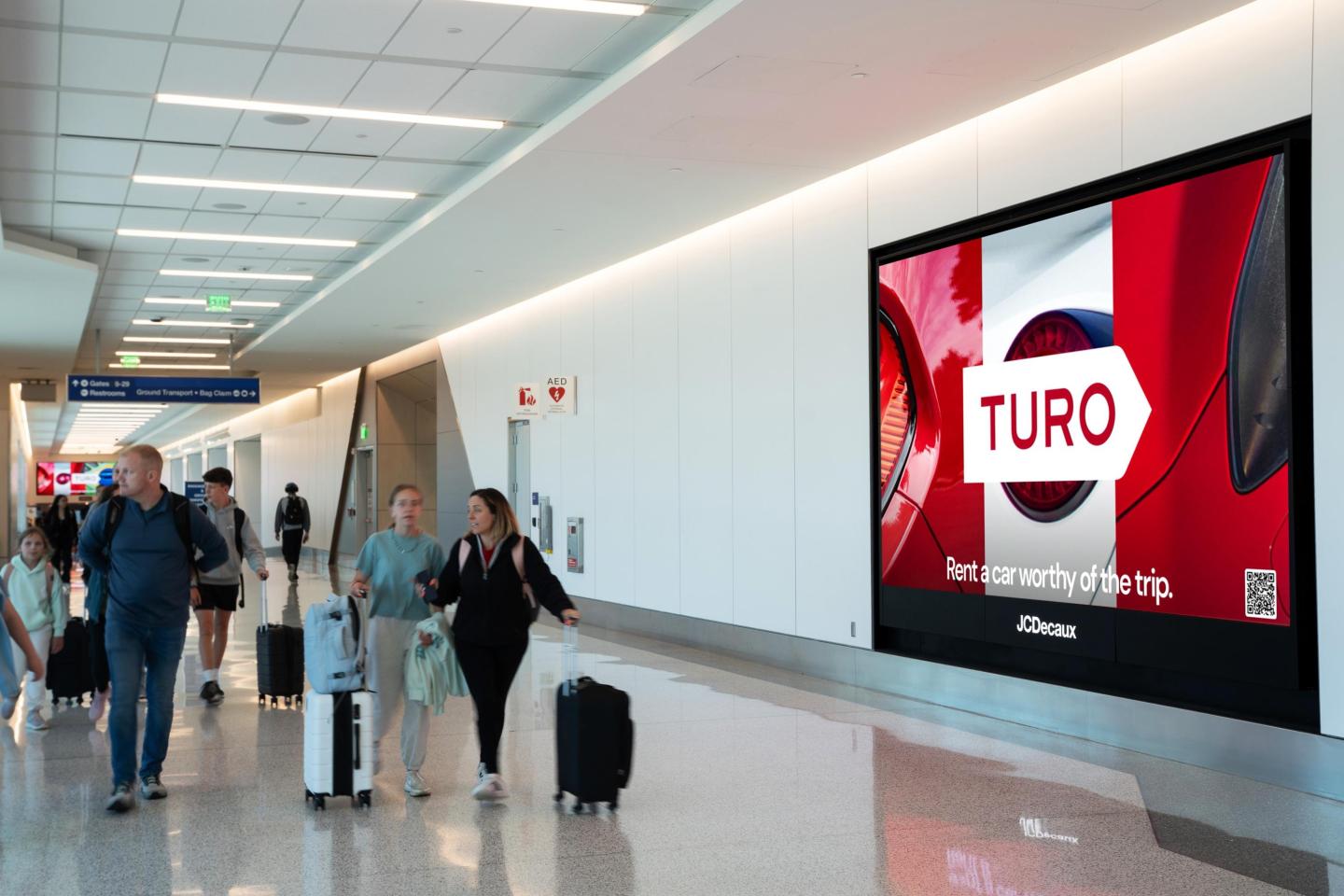
Simultaneously, car-sharing platform Turo deployed widespread, synchronized campaigns across major host city hubs, including Boston Logan, Los Angeles, Dallas, and Miami. For a service provider like Turo, the airport environment is the ultimate conversion funnel because travelers stepping off a flight are actively diagnosing their immediate mobility needs. Premium digital out of home advertising catches the consumer at their highest point of intent, shifting the marketing message from an abstract promotion into a timely, logical solution. By timing high-impact JCDecaux airport campaigns with the cultural momentum of global sports, these service brands successfully transformed transit hubs into high-performing customer acquisition engines.