
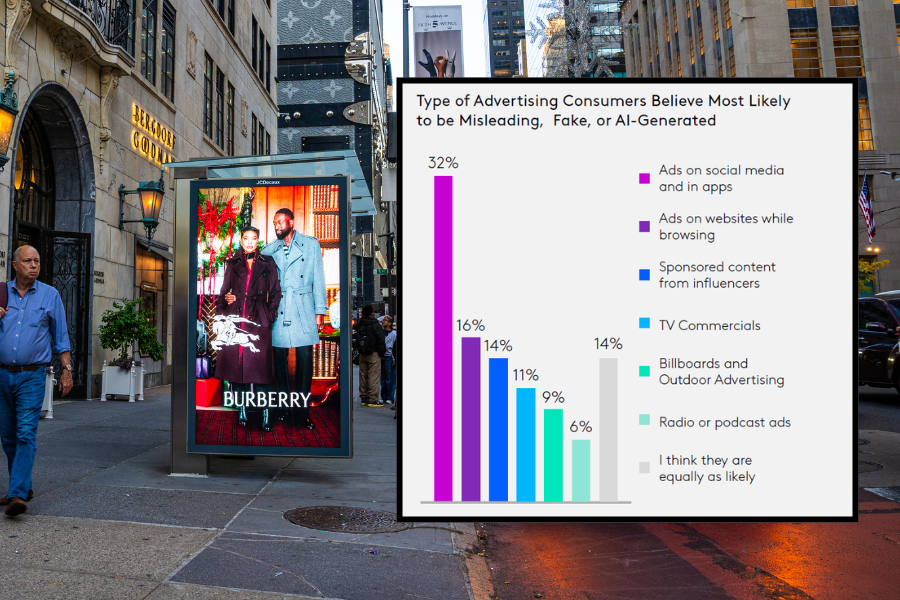
93% of consumers now question whether the content they encounter online was created by a real person or generated by AI. Across every generation, social media feeds and apps were ranked as the advertising environment most likely to contain AI-generated, fake, or misleading content, cited by 27% to 35% of consumers, compared to just 3% to 10% for billboards and outdoor advertising.
Reality is becoming more valuable
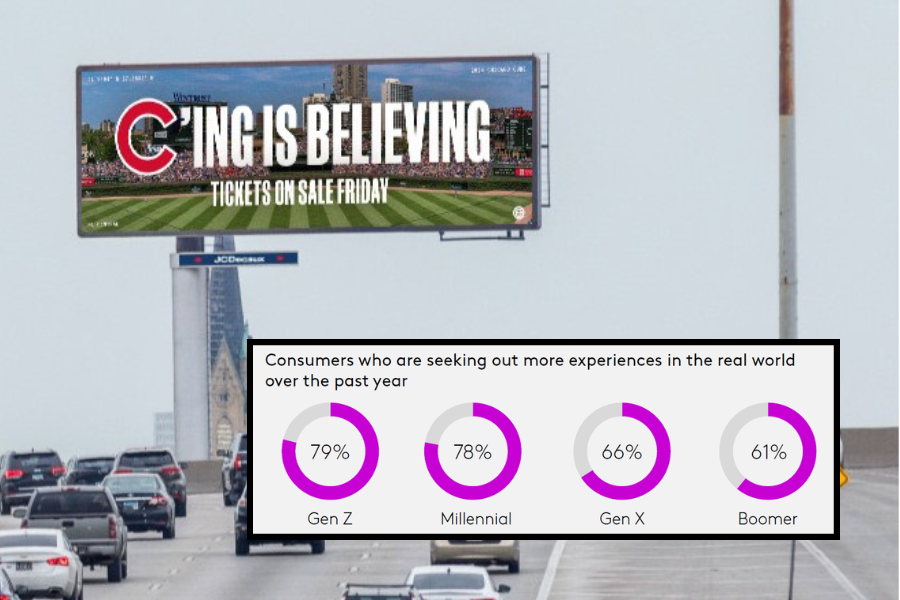
As their digital lives become more synthetic, people are increasingly seeking real-life, filter-free experiences that feel authentic, human, and shared. Gen Z and Millennials are driving the shift to real-life experiences.
Physical presence carries meaning
The majority of consumers say advertising they can see in person is more believable than advertising they only see on a screen, including 80% of Millennials, 77% of Gen Z, 72% of Gen X, and 66% of Boomers.
Consumers say that brands which physically advertise in their neighborhood signaled that they "actually" care about this place." In-person advertising was seen as "something we share in common" by 64% of Gen Z and 67% of Millennials, and 43% of Boomers agree. Consumers believe real-life advertising communicates effort, credibility, performance, and confidence.
Brand media plans need a physical layer
When asked what it says about a brand when it advertises in a public place, consumers’ top responses were:
- It has the confidence to be seen, and judged, by everyone (41%).
- It’s committed to being a part of the real world (38%).
Billboards and outdoor advertising were among the most trusted real life advertising channels, and consistently perceived as the least likely to be AI-generated, fake, or misleading by every generation surveyed.
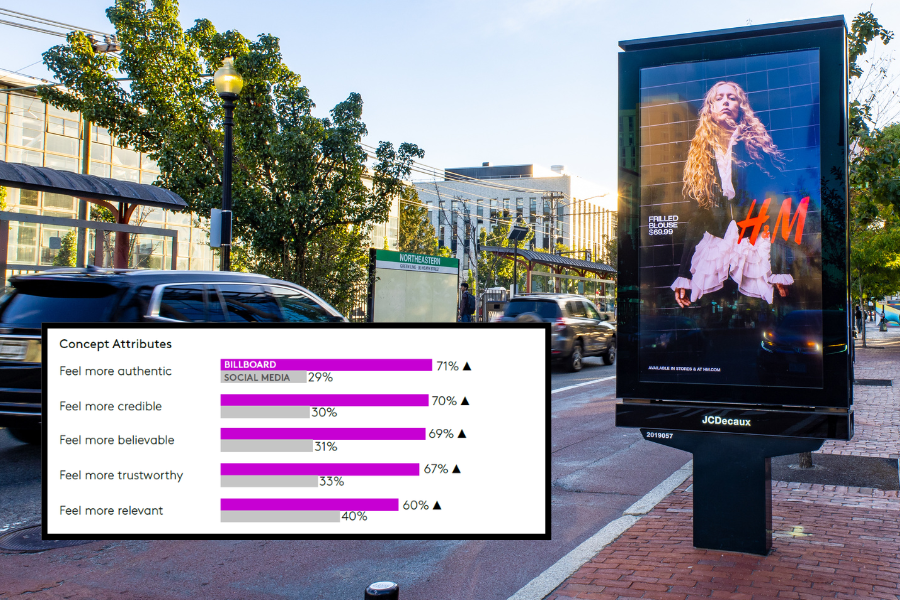
Compared with social advertising, billboards are at least twice as authentic, credible, believable, and trustworthy.
How the physical layer works
The Physical Layer creates value in three distinct ways:
1. It makes brands more trusted and real: Over 60% of consumers agree that a brand showing up in in-person advertising “feels more like part of real life” than one encountered exclusively online, and that a brand appearing in their neighborhood or at a local event feels “meaningfully different” than a brand appearing in their digital feed. Three out of four Gen Z and Millennials say they are paying more attention to advertising in public spaces, compared to just 56% of Gen X.
2. It makes brands more shared: The majority of Gen Z and Millennials both agree that “public advertising feels like something people share in common.” This is in contrast to data showing that 57% of adults believe that “technology has made us feel more isolated.”
3. It makes other media work harder: When a brand advertises in public spaces, 64% of consumers report that it feels more like “part of real life,” and 37% see it as proof of an established, legitimate business. When out-of-home advertising is paired with online or TV campaigns, nearly three out of four consumers (74%) rate the brand as trustworthy. Consumers say this real-world exposure increases their receptiveness to the ads they later see on their screens, more likely to research the brand, and more confident when making a purchase.
The power of digital + IRL media
Digital advertising like online and social formats isn’t going away. It continues to deliver targeted impressions, personalized messages, and social amplification for real-world experiences. The Physical Layer complements these strengths through brand discovery, physical community, and connection to culture.
Brands that integrate a Physical Layer into their media mix improve the effectiveness of tv, online, and social, establishing a foundation of legitimacy that they can no longer build alone.
Download the full study from Kantar and OUTFRONT here.