
Why don’t people trust AI (and why should your brand care)?
As AI usage explodes across all areas of daily life, consumer and business-facing brands are experiencing a lack of trust; while 75% of businesses report using multiple AI tools across daily functions, less than half of consumers globally are willing to trust AI systems. This trust is fractured across industries and countries, with Americans coming in at some of the least excited consumers worldwide about the future of Generative AI.
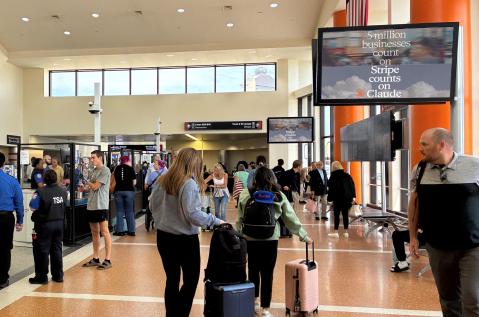
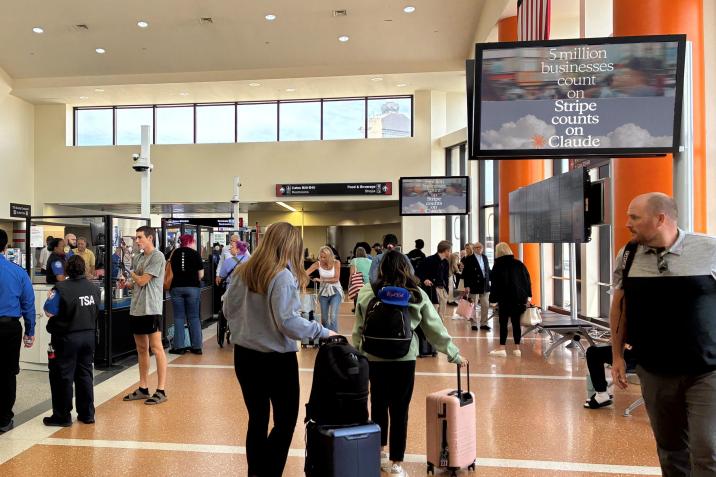
AI adoption’s rising rate even with this lack of trust raises a big question: does trust really matter for the bottom line for brands in this space? According to the Institute of Practitioners in Advertising (API), the world’s largest repository for marketing case studies, “93% of for-profit advertising campaigns that report very large increases in brand trust also record at least one very large business effect” - 41% more effective than other types of campaigns. According to their data, driving trust has a much larger impact: driving sales volume (37% of trust campaigns), profit growth (25%), brand loyalty (56%), reducing price sensitivity (11%), and increasing perceptions of brand quality (59%).
Can Airport Advertising help build trust for AI?
In a world where AI-generated content causes consumers to question whether what they see online as real, out of home advertising stands apart as a real-world, physical presence that allows people to experience brand messaging in real life. The CIO of Omnicom describes OOH as an “authenticity anchor,” urging brands to leverage the medium “to capitalize on the power of real and the power of trust.” Beyond real world presence, airport out of home takes this opportunity to a higher level, allowing advertisers access to a gated, brand safe space with a captive audience and high levels of perceived trust and value that transfer onto airport advertisers.
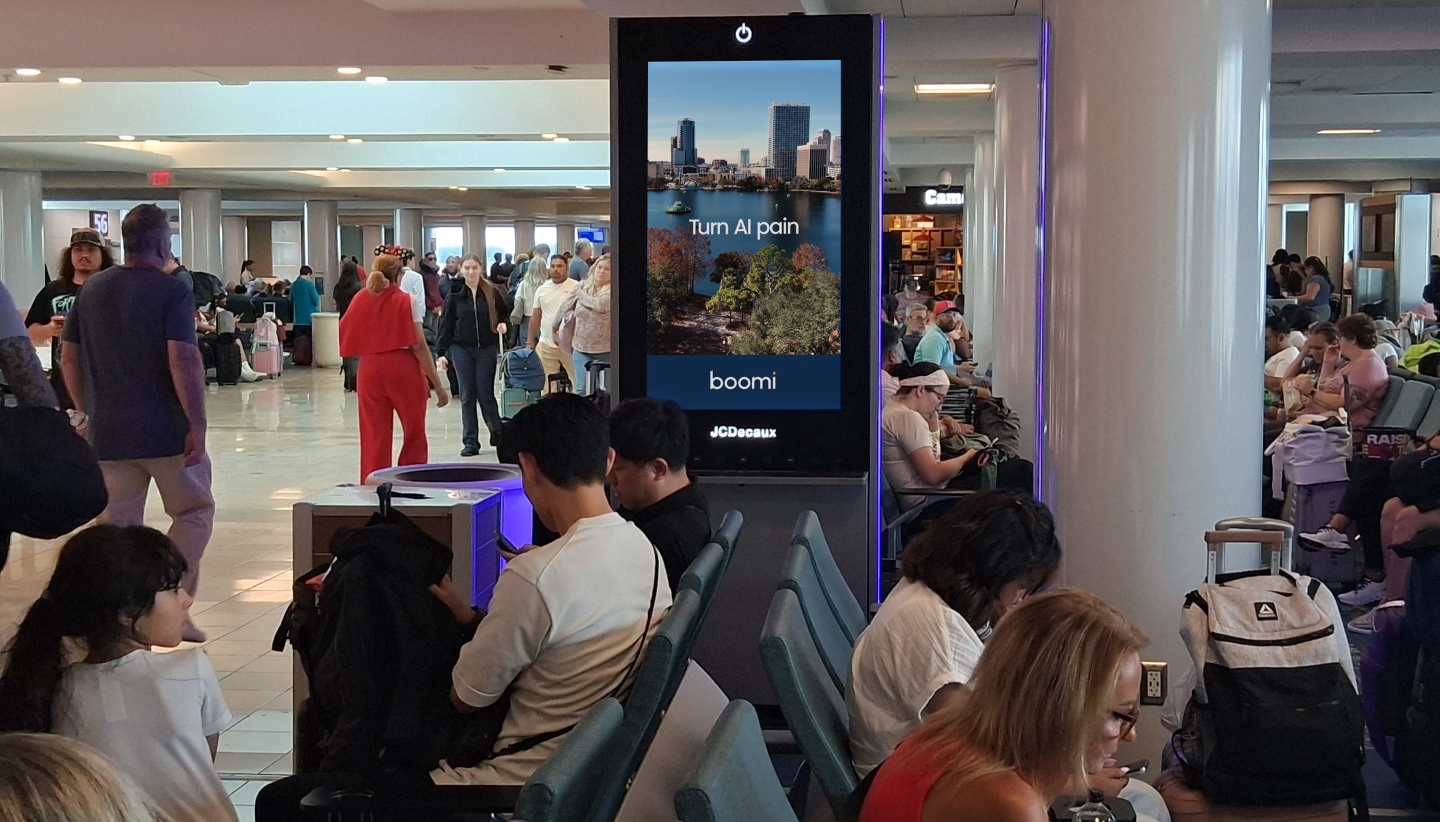
Can brands turn this trust issue from “AI pain” to “AI gain” (Boomi)?
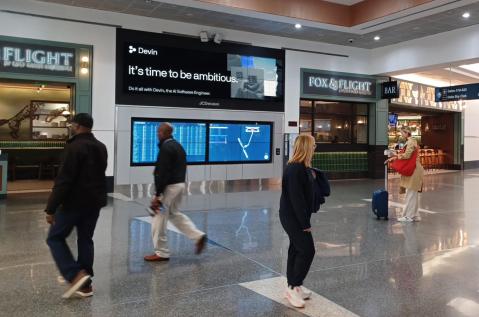
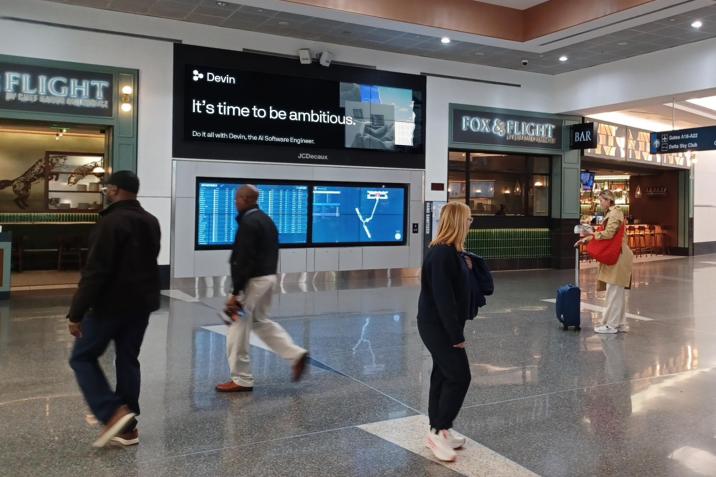
“Think your AI can be trusted? (DevRev)” “Give your AI more runway and your data less risk (Dell)” “Don’t use AI without protection (Palantir).”
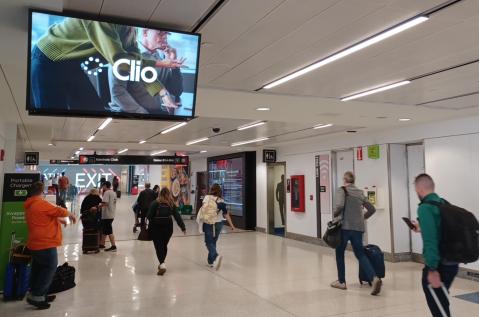
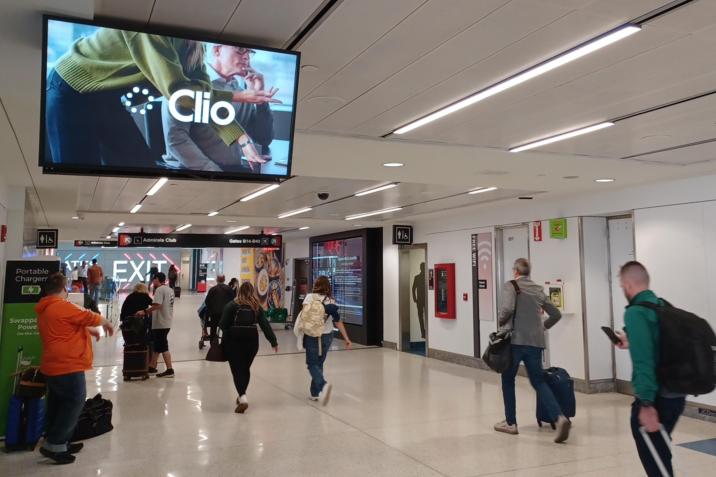
According to McKinsey, concerns about inaccuracy and cybersecurity risks are the main barriers delaying fully scaled AI business adoption. This mistrust is an issue- but with airport advertising, it can also be an opportunity; these brand messages, and more like them, are popping up across JCDecaux’s airport advertising networks in some of the busiest travel hubs in the US. Brands like Palantir, Boomi, Dell, DevRev, and more, are taking to our high-frequency, high-trust placements to show the millions of passengers exposed to these airport ads that they’re addressing the core issues driving AI mistrust.
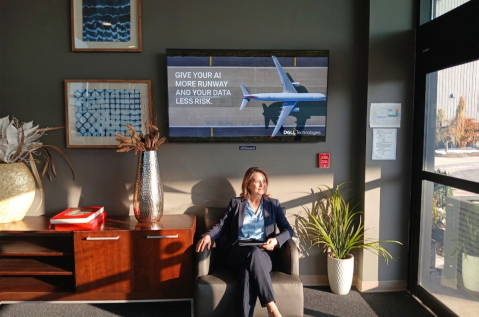
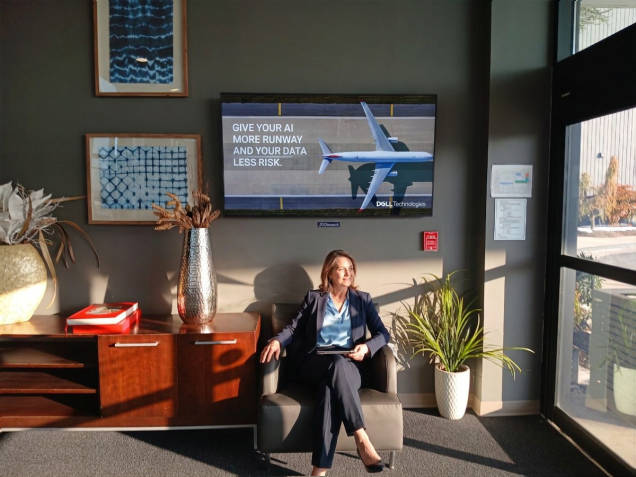
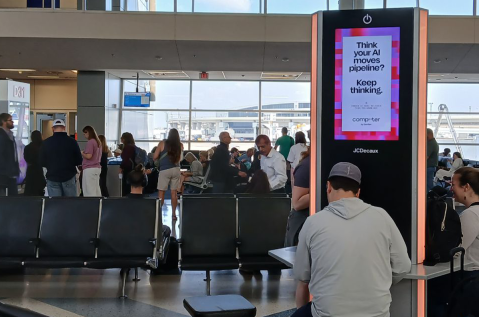
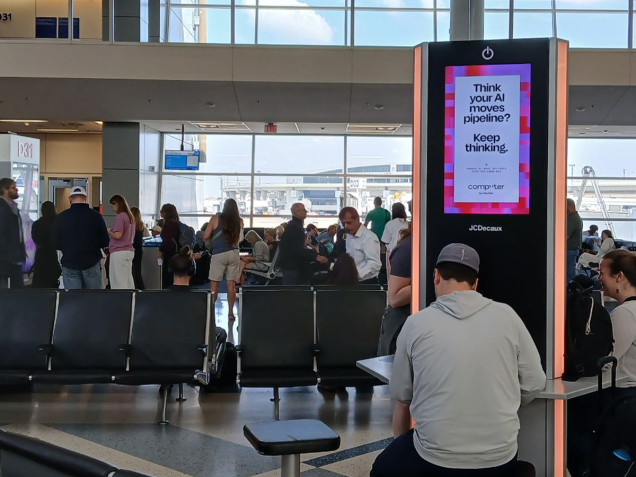
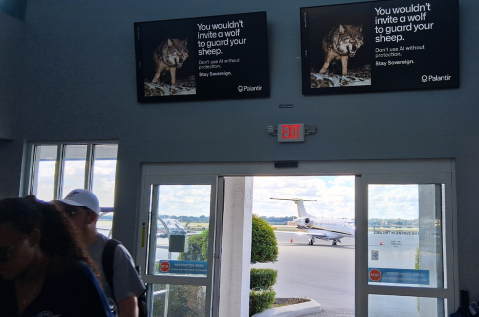
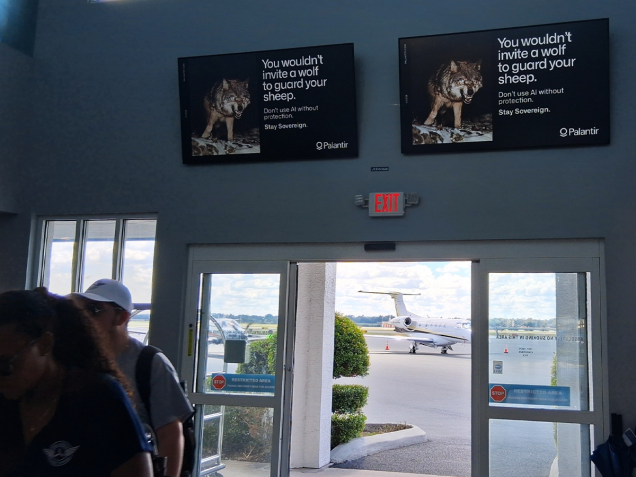
This isn’t just mass reach- it is targeted to the key audiences responsible for implementing new AI tools and deepening business investment. Across JCDecaux airports, 1 in 4 exposed passengers are traveling for business, and more than 1 in 5 are classified as ‘Business Decision Makers.’ By leveraging our airport wide digital networks to capturing the full consumer journey, these campaigns are delivering +31% message recall, +9% brand perception, and +15% brand choice with the audiences that really matter. (Lumen x JCDecaux).
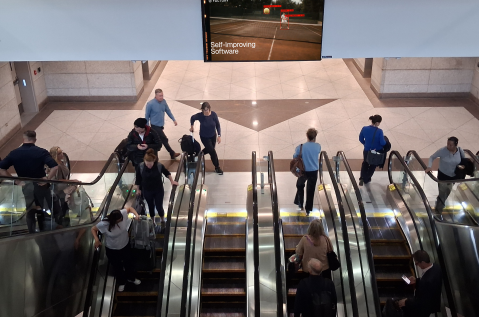
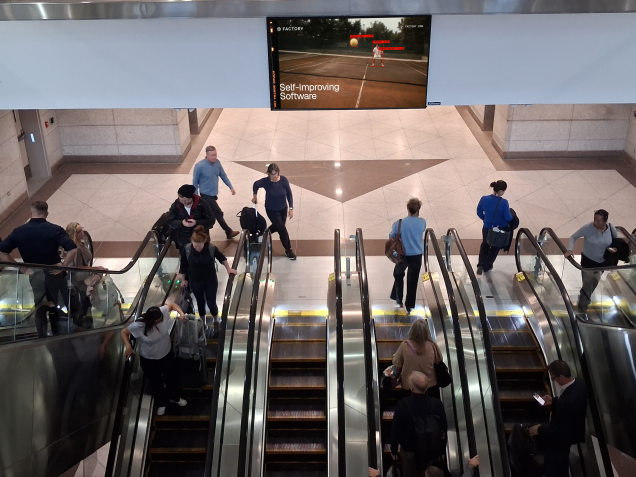
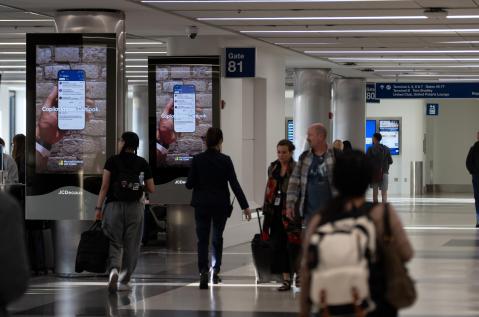
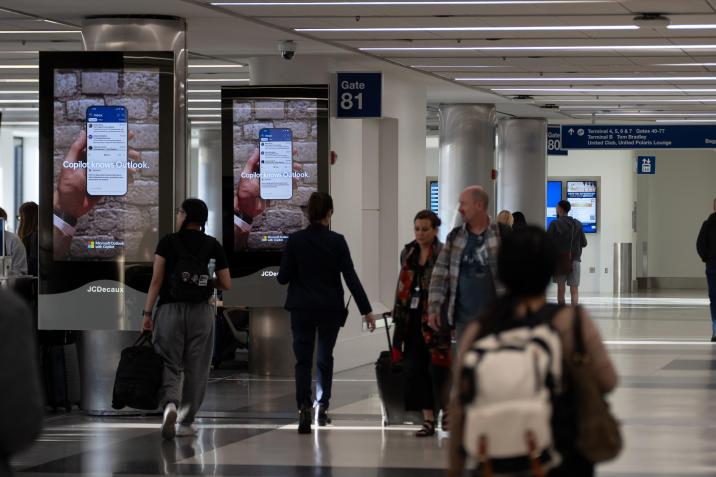

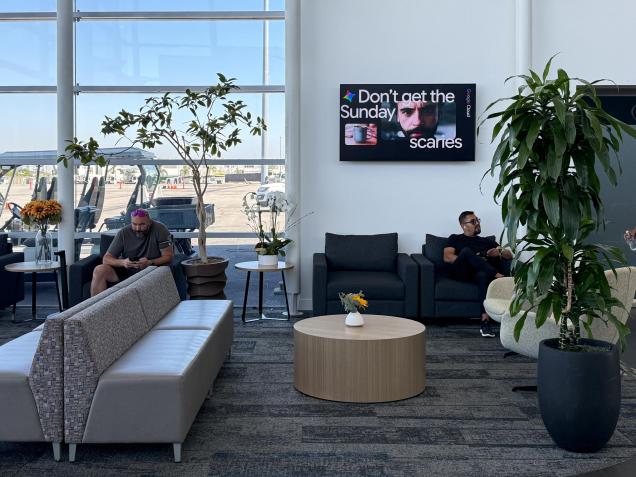
Of course, these aren’t the only messages AI brands are using to stand out from their competition in this increasingly crowded industry. Other brands, like Google Gemini, are choosing to target the business traveler audience by focusing on the benefits that drive adoption, a choice that makes sense given that 63% of the top use cases for AI in 2026 are explicitly work related or are applicable for work/home.